QA Automation Services Outsourcing from Argentina
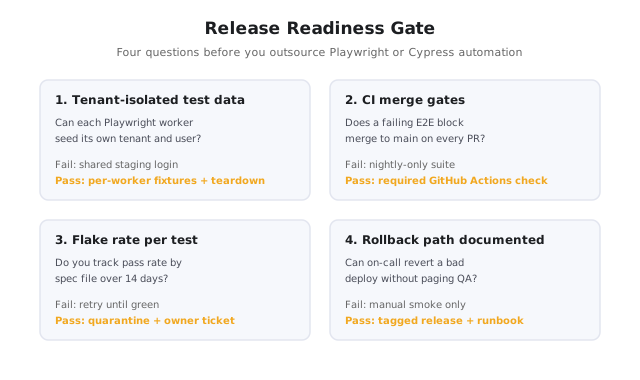
What: Production QA automation means Playwright or Cypress E2E suites wired as required CI merge gates, API contract tests on critical endpoints, flake tracking per spec, and release runbooks your team can execute without paging engineering. Who: VP Engineering, QA leads, and platform owners at B2B SaaS companies evaluating nearshore QA automation services outsourcing, not a one-off script dump. Problem: Manual regression cannot keep up with weekly releases, nightly suites fail silently, and developers merge anyway because nobody trusts the signal. Why nearshore: Automation delivery needs same-day pairing with product and DevOps when a gate blocks a release. How to evaluate us: Ask whether a vendor can show tenant-isolated fixtures, merge gates that actually block PRs, flake quarantine with owners, and suites you own after handoff. That is our Release Readiness Gate in the hero diagram.
We outsource the full QA automation stack: test architecture, Playwright or Cypress implementation, CI pipeline integration, contract tests, flake remediation, and operator runbooks for release day. Need LLM output evaluation or prompt regression? See AI testing for that layer. Need one senior SDET embedded in your sprint board? See hire QA automation developers for staff augmentation.
Siblings Software is a software outsourcing company headquartered in Córdoba, Argentina, with daily overlap on US Eastern time. We have shipped outsourced engineering since 2014 across B2B SaaS, fintech, and healthcare platforms. Browse the full catalog on our all services directory or compare our nearshore development model if procurement is weighing regions.
What the Service Covers
QA automation outsourcing is the engineering work of turning release anxiety into a deterministic CI signal. A typical pattern: seed tenant-isolated fixtures per Playwright worker, run signup-to-billing smoke on every pull request, gate merge on green, contract-test critical APIs beside the browser suite, and quarantine any spec that drops below a fourteen-day pass-rate threshold.
That is different from buying a record-and-playback tool. You own the fixtures, Page Objects, CI configs, and flake policy. It is also different from AI testing, which evaluates LLM outputs and prompt drift. QA automation here means deterministic E2E and API coverage for product flows your customers depend on.
We build on frameworks your team can extend. Playwright is our default for parallel workers, trace artifacts, and multi-browser coverage. Cypress fits teams already invested in its component testing model. When suites outgrow a single runner, we shard jobs using Playwright test sharding. CI integration pairs with our DevOps engineering practice when pipelines need hardening beyond test code.
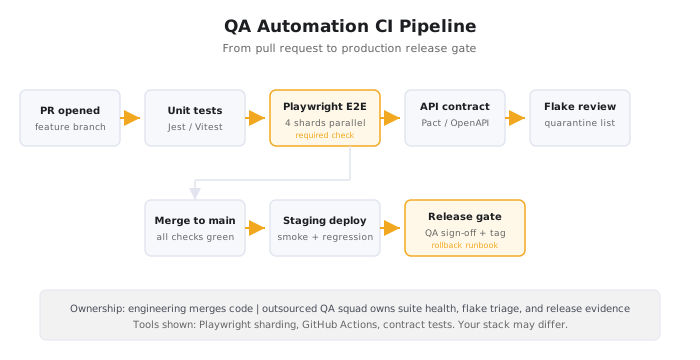
Most production QA programs treat merge gates as non-negotiable: a failing E2E blocks merge to main, not just a Slack warning after the fact.
Who It Is For
SaaS teams shipping weekly who still run regression manually the night before release. If your CI suite is red half the time and developers click retry until green, you are the audience.
B2B SaaS product teams
Multi-tenant apps with role-based flows, billing upgrades, and admin consoles that need E2E coverage without shared staging logins.
Platform and DevOps leads
Teams that need merge gates, test runner infrastructure, and flake dashboards wired into GitHub Actions or GitLab CI.
QA managers modernizing
Manual QA teams ready to automate the top twenty flows but lacking Playwright or Cypress depth in-house.
Series A to C startups
Fast release cadence with no dedicated SDET yet. Need a first CI-gated suite before the next funding diligence question on quality.
API-first SaaS vendors
Public REST or GraphQL APIs with breaking-change risk. Contract tests beside browser smoke catch schema drift before customers do.
Teams replacing brittle Selenium
Legacy WebDriver suites that flake on every deploy. Migration to Playwright with parallel workers and trace-on-failure.
Typical Project Scenarios
Six situations we see on discovery calls. Each maps to a bounded MVP we can scope in the first week.
Stand up CI merge gates from zero
No E2E runs on pull requests today. Nightly jobs fail silently and nobody blocks merge. We wire Playwright on every PR, mark the check required in GitHub, and ship a release runbook for what to do when red.
Stabilize a flaky suite developers ignore
Forty specs exist but pass rate hovers around seventy percent. We audit root causes, quarantine chronic flakes, fix race conditions and shared-login issues, and restore trust in the signal.
Add API contract tests beside E2E
Frontend smoke passes while backend teams ship breaking schema changes. Pact or OpenAPI validators run in the same pipeline so contract failures block merge before browser tests even start.
Migrate Selenium to Playwright
WebDriver tests take ninety minutes and still miss regressions. We port critical paths to Playwright with parallel workers, trace artifacts, and a deprecation plan for legacy specs.
Cover multi-tenant role matrices
Admin, manager, and viewer roles behave differently per tenant. Fixture factories seed isolated tenants per worker so parallel runs do not stomp each other's data.
Build release readiness for SOC 2 diligence
Auditors ask for evidence that releases are tested before production. We document the Release Readiness Gate, CI gate history, and rollback steps. For broader platform hardening, see platform engineering.
How Delivery Works
Six phases, usually six to ten weeks for a first CI-gated slice. Flake quarantine before declaring a spec production-ready is non-negotiable on suites that block merge.
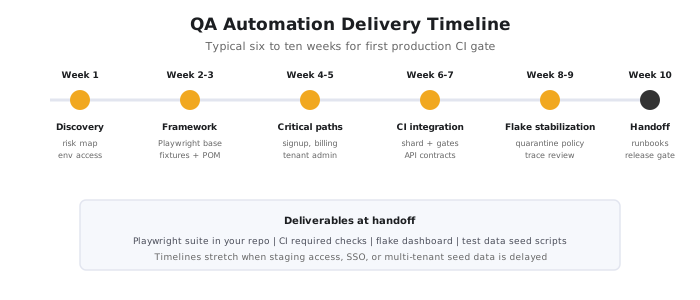
Discovery maps critical user journeys, inventories existing tests, and runs the Release Readiness Gate from the hero diagram. If tenant isolation or merge gate ownership fails, we fix that before writing specs.
Fixture design defines per-worker tenant seeding, API helpers, and teardown hooks. Shared staging logins are replaced with factories your team can extend.
E2E implementation covers signup, core workflow, and billing smoke in Playwright or Cypress. Page Objects stay thin. Trace and video capture activate on first failure.
Contract tests validate two to three critical APIs with schema or Pact checks. Failures surface before browser tests when backend teams ship breaking changes.
CI integration wires parallel workers, required status checks, and flake dashboards. We pair with DevOps engineering when runner infrastructure needs Terraform or secrets vaulting.
Handoff includes a release runbook, quarantine policy, and paired weeks where your team adds specs under our review. Rollback steps are documented so on-call can act without paging us.
Team Composition
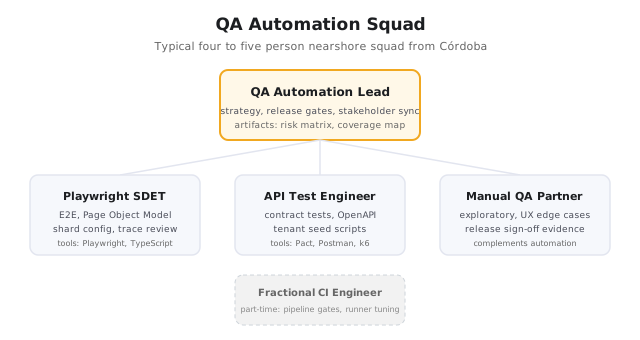
A four- to five-person squad is the usual shape for a first CI-gated slice. The CI platform seat and the fixture architect are the two roles vendors cut to win on price. Those are also the roles that determine whether merge gates stay green after your next major UI refactor.
Typical roster: SDET tech lead, Playwright engineer, API contract engineer, CI platform engineer, and a part-time product liaison during discovery. For ongoing coverage expansion after launch, the same squad can run as a dedicated development team on a monthly retainer. For a single senior SDET inside your org, staff augmentation is the better fit.
Project, dedicated team, or staff augmentation depending on how much of the QA platform you want us to own.
Pricing and Engagement Models
Project-based
Fixed scope for a first CI-gated suite: fixtures, twenty to forty stable specs, contract tests, CI wiring, flake policy, runbooks. Typical duration six to ten weeks. Published bands run USD 20,000 to USD 120,000 after discovery, depending on tenant complexity and environment count.
Dedicated team
Ongoing squad owning coverage expansion, flake remediation, and release support. USD 12,000 to USD 60,000 per month for four to six people depending on seniority mix and on-call load.
Staff augmentation
Embed one or two senior SDETs when you already own architecture and need hands on Playwright specs, contract tests, or CI pipelines. USD 4,500 to USD 9,000 per month per senior engineer on published brackets.
Compared With In-House Hiring, Freelancers, and Agencies
Outsource when
- You need a first CI-gated suite in a quarter, not after a six-month hiring cycle for scarce Playwright-plus-CI talent.
- Your internal team knows the product but not tenant-isolated fixtures, merge gate wiring, or flake quarantine discipline.
- Release managers want a third party to document the Release Readiness Gate and rollback steps before SOC 2 or enterprise diligence.
- You are planning coverage across multiple product areas and want shared fixture libraries from the start.
Keep it in-house when
- You already run a mature SDET practice and only need a short spike on one new flow.
- Your app is a single-tenant internal tool with no multi-role matrix and no public API.
- A vendor SaaS test recorder covers most of your volume with acceptable flake rates.
Freelancers can script flows quickly but rarely stay for flake remediation or on-call during release week. Nearshore delivery from Córdoba gives you senior SDET profiles at a lower total cost than hiring the same mix in major US metros, with overlap your product team can use. Browse case studies for examples of how we work with product teams.
Illustrative Scenario: Northline Analytics Release Automation
Composite illustrative scenario only. Not a published client case study. No performance metrics are claimed.
The situation
Northline Analytics is a fictional B2B SaaS company selling embedded analytics dashboards to mid-market retailers. Product ships every Thursday. QA runs a manual checklist the night before release. A Playwright suite exists but runs only nightly, fails about half the time, and developers merge pull requests without waiting for green because nobody trusts the signal.
Multi-tenant role matrices make fixture design hard: admin, analyst, and viewer permissions differ per customer workspace. API teams ship schema changes that break dashboards before browser tests catch them. The VP Engineering wants merge gates and a release runbook before the next enterprise renewal cycle.
What we would deliver
An eight-week nearshore project with a five-person squad from Córdoba: SDET tech lead, Playwright engineer, API contract engineer, CI platform engineer, and part-time product liaison. Daily overlap with the US Eastern engineering lead during discovery and handoff.
- Tenant-isolated fixture factories so each parallel Playwright worker seeds its own workspace and tears down after the run.
- Twenty-five stable specs covering signup, dashboard creation, data export, and billing upgrade with trace-on-failure artifacts.
- Pact contract tests on the analytics query API and workspace provisioning endpoints, running before browser smoke in CI.
- Required GitHub Actions status check blocking merge to main on any red spec, with flake quarantine policy and owner tickets.
- Release runbook documenting rollback, who gets paged when CI is red on release day, and how to add a new spec without breaking parallel runs.
In a scenario like this, the win is operational: a merge gate product and platform leads trust, and a runbook the on-call engineer can follow without paging the outsourcing vendor.
Risks and Mitigation
Flaky tests erode trust. Developers ignore red CI and merge anyway. Mitigation: fourteen-day pass-rate tracking per spec, quarantine with owner tickets, capped retries with logging, and trace artifacts on first failure.
Shared test data causes collisions. Parallel workers overwrite each other's tenants. Mitigation: per-worker fixture factories, unique namespace prefixes, and teardown hooks in afterEach blocks.
Slow suites block velocity. Ninety-minute runs mean developers skip CI. Mitigation: shard workers across machines, tag smoke vs full regression, and run deep suites on merge to main only.
API drift breaks UI tests silently. Backend ships schema changes that pass unit tests but fail in production. Mitigation: contract tests gate before browser smoke, with versioned schemas in the repo.
Vendor lock-in on test infrastructure. Mitigation: specs and CI configs in your repositories, infrastructure-as-code for runners, and documentation that does not require our login to operate.
Handoff failure. Mitigation: paired weeks where your team adds specs under review, recorded runbooks, and explicit ownership transfer checklist before we step down to advisory hours.
Questions buyers ask before the first discovery call
Frequently Asked Questions
Manual QA catches regressions through human exploration but does not scale with weekly releases. Outsourced QA automation builds Playwright or Cypress suites, CI merge gates, API contract tests, and flake tracking so every pull request gets a deterministic signal before merge. That is different from AI testing, which evaluates LLM outputs, prompt drift, and model safety. We ship deterministic E2E and contract coverage for SaaS product flows.
Playwright is our default for multi-browser SaaS apps, parallel workers, and trace artifacts on failure. Cypress fits teams already invested in its runner and component testing model. We pick based on your stack, CI platform, and whether you need mobile WebKit coverage. API contract tests often run on Pact or schema validators beside the browser suite. Framework choice matters less than tenant-isolated fixtures, merge gates, and flake quarantine discipline.
We track pass rate per spec over fourteen days, quarantine tests below a threshold, and assign an owner before un-quarantine. Retries are capped and logged, not used to hide instability. Root causes we fix: shared staging logins, race conditions on async UI, clock-dependent assertions, and tests that depend on production-like data seeded by another job. Playwright trace and video on first failure speed diagnosis. When suites grow past thirty minutes, we shard workers using Playwright test sharding in CI.
A first production-ready slice covering signup, core workflow, and billing smoke with CI merge gates typically ships in six to ten weeks. That includes discovery, fixture design, twenty to forty stable specs, contract tests on two to three critical APIs, and a release runbook. Full regression across tenants and roles runs ten to fourteen weeks. Timelines stretch when staging access is slow, test data is shared across teams, or security review blocks credential vaulting.
Project-based builds for a first CI-gated suite typically land between USD 20,000 and USD 120,000 depending on tenant complexity, environment count, and contract test scope. Dedicated squads run USD 12,000 to USD 60,000 per month for ongoing coverage expansion, flake remediation, and release support. Senior staff augmentation for SDETs ranges from USD 4,500 to USD 9,000 per month per engineer on published brackets. We confirm pricing after discovery once we know your release cadence, stack, and current flake rate.
You do. Playwright or Cypress specs, fixtures, Page Object layers, Pact contracts, GitHub Actions or GitLab CI configs, and infrastructure-as-code for test runners ship to your repositories. We document how to add a spec, quarantine a flake, and roll back a bad release without paging us. Managed on-call for test infrastructure is optional, not a requirement to keep CI green.
Yes. Delivery teams are based in Córdoba, Argentina, with daily overlap on US Eastern business hours. QA automation projects need same-day iteration with product and platform owners when a merge gate blocks a release, so timezone alignment matters as much as it does for feature engineering.
Related Services