Hire SRE Engineers for Staff Augmentation
· Typical time to first production reliability change: 12-15 business days
If you are evaluating hire SRE engineers options from Argentina, you likely have uptime commitments that outpaced how you measure and respond to failure. You need someone who owns SLOs, error budgets, on-call sustainability, and incident runbooks in your tooling, not a consultant deck about observability maturity. This page answers what embedded SRE staff augmentation includes, what monthly USD bands look like, and how we vet on production-shaped reliability problems before anyone joins your paging rotation.
Site reliability engineering in 2026 sits between product promises and platform execution. Teams publish availability targets, run multi-region Kubernetes estates, and still page the wrong engineer because alerts measure CPU instead of user-visible latency. We staff that gap from Córdoba with full-time engineers who overlap US Eastern business hours. For adjacent roles, see DevOps engineer hiring when CI/CD and pipeline hygiene are the bottleneck, Kubernetes developer augmentation for cluster day-two work, and nearshore developer hiring for application teams. For delivery context, read our staff augmentation overview.
When you need full squad ownership rather than individuals embedded in your rituals, compare DevOps engineering outsourcing and platform engineering services from the same leadership team.
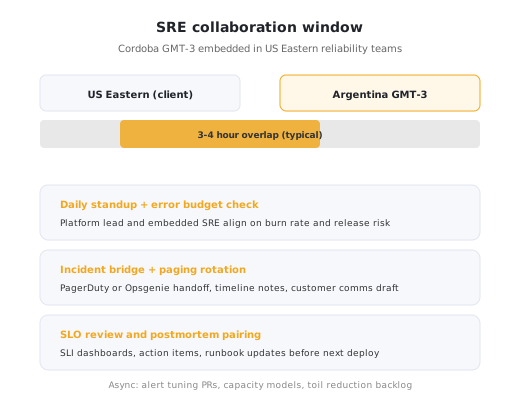
Most clients get 3-4 hours of direct overlap with US Eastern time for incident sync, SLO reviews, and on-call handoffs.
Prefer numbers before a call? Jump to monthly pricing bands for embedded seniors, pairs, and small reliability pods.
What SRE engineers do in your platform team week to week
Reliability ownership between the uptime promise and the pager, not a reprint of generic DevOps outsourcing copy.
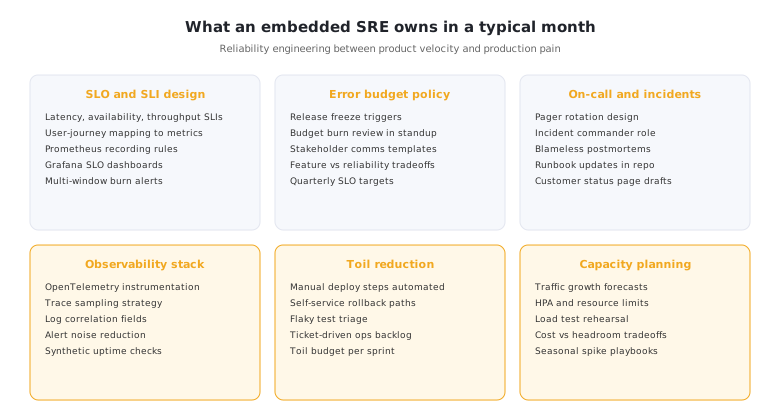
"Senior SRE" means different things on different teams. In a typical month with us, an embedded engineer might define SLIs and SLOs for a checkout API, tune alert routing so pages map to user impact, document a blameless postmortem template, reduce noisy dashboards that nobody reads, and rehearse rollback before a high-traffic release window. The diagram below is a schematic of those parallel tracks; your mix depends on backlog, on-call load, and how far observability has drifted from product priorities.
SLOs and error budgets
User-facing SLIs tied to latency, availability, and throughput with error budget policies your product team can act on. We follow Google SRE book conventions and your naming standards instead of vanity uptime percentages nobody measures.
On-call sustainability
Rotation design, escalation paths, and alert hygiene so engineers sleep. Week one includes shadowing your paging tool and mapping which alerts actually correlate with customer tickets.
Observability tied to impact
Metrics, logs, and traces that answer "is the user affected?" not only "is the pod healthy?" We reference OpenTelemetry signal concepts when clients standardise collectors and backends.
Incident response and postmortems
Runbooks, severity definitions, and blameless postmortem templates that survive team turnover. For teams exploring AI-assisted triage, see our AI agent observability development lane.
When companies hire SRE engineers through us
Four buyer shapes cover most discovery calls; your situation may combine two.
Platform leads with alert fatigue
On-call wakes three engineers for the same flaky health check, but nobody owns SLO definitions. Staff aug is the bridge while you close an in-house SRE hire, or it becomes the steady state when US funnel cost is not where you want margin to go.
CTOs inheriting uptime debt before an enterprise deal
A prospect asked for published SLOs and your team has dashboards but no error budget policy. You need a calm audit: which services are load-bearing, which alerts page humans, which metrics actually predict user pain. The goal is a written map before anyone suggests a big-bang observability rewrite.
SaaS teams scaling past "we'll fix reliability later"
Multi-tenant architecture needs per-tier availability targets and incident runbooks that match how support actually escalates. Product velocity outpaced measurement discipline. You need someone who can define SLOs, tune paging, and teach application teams what "done" means for reliability work.
Head of platform without SRE bandwidth
Terraform and CI/CD already consume the calendar; twelve services wait for SLO definitions. Staff augmentation adds execution capacity without reorganizing the department chart, including patterns similar to our Highside case study delivery discipline.
None of the above? Say so on the call. We turn down engagements when the fit is wrong, which keeps our bench credible.
SLO Readiness Gate (coverage, budgets, on-call)
A lightweight decision model buyers can reuse even if they never hire us.
Most mismatches on SRE engagements come from hiring the wrong shape of senior: a strong dashboard builder who will not touch on-call rotation design, or a "DevOps" generalist who has never written an error budget policy under executive scrutiny. Before we shortlist, we score three signals with your platform lead on a thirty-minute call.
- Signal A: SLO coverage. If fewer than half your revenue-critical services have published SLIs and SLOs, you cannot trade release velocity against measured risk. We overweight candidates who have defined availability and latency targets tied to user journeys, not only infrastructure uptime percentages.
- Signal B: error budget policy. If product and platform disagree about what happens when the budget burns, incidents become political instead of operational. Error budgets need a written policy: freeze features, roll back, or accept risk with executive sign-off.
- Signal C: on-call sustainability. If engineers dread the pager because alerts fire on thresholds nobody validated, burnout arrives before the next hire. We prioritize candidates who have reduced page volume through alert tuning and runbook discipline, not only those who add more dashboards.
Across dozens of reliability staff aug engagements for teams in the US, Canada, and the UK, shortlists that used those three signals had the lowest swap rate. That is not a guarantee for your team; it is how we reduce guesswork before anyone signs a statement of work.
How Siblings vets SRE candidates
Short, inspectable steps that end with you meeting the person who will join your rotation.
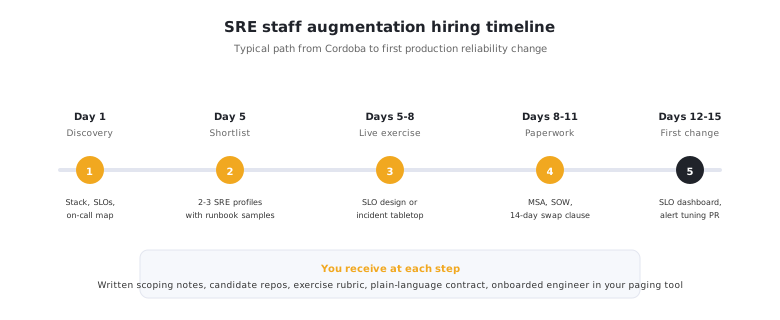
- Stack and risk map (day 1). Observability tooling, paging vendor, SLO maturity, regulated data boundaries, hard nos on on-call expectations, budget envelope. We say no on the call when we are the wrong partner.
- Written scoping answer (days 2-4). Each finalist explains what they would not alert on in the first sprint and which dashboards they would retire from a noisy environment. Buzzword lists without tradeoffs fail here.
- Shortlist (by day 5). Two or three profiles from our bench plus, when needed, engineers we have tracked for years who are finishing notice elsewhere. You receive incident writeups where shareable and SLO definitions from prior engagements when available.
- Live exercise (days 5-8). Ninety minutes with your platform lead on a sanitised slice: define SLIs for a latency-sensitive endpoint, draft a blameless postmortem from a timeline, or tune alert routing so the right team pages first. No trivia wall.
- Paperwork (days 8-11). Master services agreement, monthly statement of work, fourteen-day swap clause in plain language.
- First production reliability change (days 12-15). Onboarding pairs on a small, reversible improvement such as retiring a noisy alert or publishing one service SLO so you see integration speed, not slide decks.
Engagement models and monthly ranges
Published bands beat "contact us for a quote" when you are budgeting a quarter.
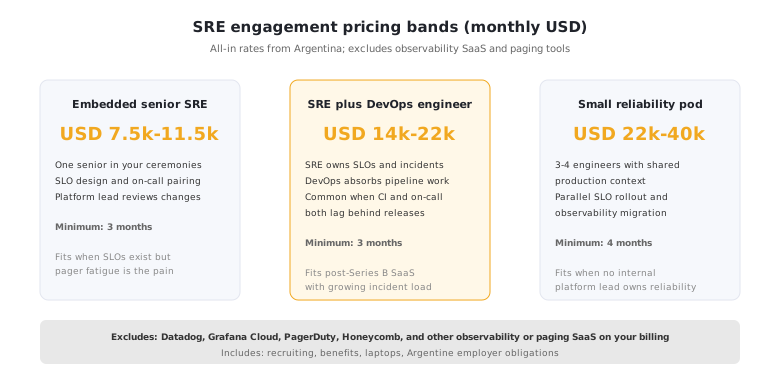
We publish ranges because hidden pricing wastes cycles. The point inside the band moves with seniority, how much stakeholder-facing English you need, and rare depth such as multi-region SLO rollouts or regulated incident response support. Figures mirror our published US bands, adjusted for Argentina delivery economics.
Embedded senior SRE engineer
One senior in your ceremonies, SLO reviews, and on-call rotation or shadow track. Strong when your platform lead can prioritize and paging is already mostly sustainable.
Monthly: USD 7,500-11,500. Minimum: three months.
SRE plus DevOps engineer
The SRE senior sets SLO and on-call guardrails; the DevOps engineer absorbs pipeline and infrastructure work once context lands, usually by week four. Common when reliability rollout and CI hygiene both lag.
Monthly: USD 14,000-22,000. Minimum: three months.
Small reliability pod (three to four engineers)
Covers vacations internally and can split between SLO rollout and a parallel observability migration or on-call redesign track under your lead. If you want a vendor-owned roadmap instead, dedicated team outsourcing is usually the better commercial shape.
Monthly: USD 22,000-40,000. Minimum: four months.
Figures include recruiting, benefits, laptops, and employer costs. Observability SaaS, paging tools, and cloud accounts stay on your billing.
SRE with us versus freelancer, in-house, or large offshore bench
Each option wins sometimes; pretending otherwise wastes your time.
Freelance marketplaces
Win on narrow spikes under roughly eighty hours. Lose on continuity, on-call discipline, and postmortem culture when the incentive is ticket throughput.
In-house hiring in the US or UK
Wins on five-year ownership. Loses on funnel length and regret cost when the hire misses at month six while paging incidents continue.
Large offshore agencies
Win when you need ten mid-level operators with a PM layer. Lose when the engineer in the interview is not the engineer in your paging rotation, or when SLO depth is change-order territory.
Where we sit
Small senior bench, GMT-3, full overlap with US Eastern hours, fifteen-day notice after the minimum, and the person you interview is the person who joins on-call. That is the trade we optimize for.
Illustrative engagement (composite, anonymised)
A shape we have shipped multiple times; details blended to protect clients. Not a named case study.
US B2B SaaS: SLO rollout and on-call redesign from alert chaos
Context (illustrative). A vertical SaaS vendor serving mid-market customers ran twenty-three microservices on Kubernetes with Datadog dashboards per team but no published SLOs. On-call woke four engineers per week for CPU thresholds that did not correlate with support tickets. Product wanted enterprise-tier availability language in contracts; internal DevOps owned CI/CD pipelines but nobody owned error budgets or postmortem templates.
What we did. One embedded senior SRE and one mid-level DevOps engineer over five months from Córdoba: defined SLIs and SLOs for six revenue-critical APIs, published error budget policies with product sign-off, retired forty-one noisy alerts, rewrote escalation paths in PagerDuty, and documented blameless postmortem templates. Weeks one and two were on-call shadowing and alert inventory, not hero dashboard builds.
Outcome (rounded composite). Weekly page volume dropped from roughly eighteen to six after alert tuning; first service reached a published 99.9% latency SLO with a tracked error budget; mean time to acknowledge improved because pages routed to the owning team; enterprise security review completed without a reliability remediation letter. The internal platform team kept shipping application features in parallel.
Caveat. This is a composite of several SaaS-shaped engagements, not a single client quote. Your service count, compliance scope, and existing observability layout will change the timeline. For a published reference with observability-heavy platform work, see the NetApp case study.
Risks of external SRE staff and how we mitigate them
Honest controls beat "risk-free" slogans.
Pager access on week one
Mitigation: shadow rotation before primary on-call, documented escalation paths, explicit severity definitions agreed with your lead.
Interview star, week-three stall
Mitigation: exercise on real incident timelines, fourteen-day swap window, explicit day-fourteen check-in with your platform lead.
Knowledge leaves with the engagement
Mitigation: SLO definitions, runbooks, and postmortem templates live in your wiki or repo, not a vendor portal.
Vanity dashboard work instead of page reduction
Mitigation: monthly scorecard on three to five numbers your leadership tracks: page volume, SLO coverage, mean time to acknowledge, error budget burn rate, postmortem action item closure.
Why Siblings for SRE staff augmentation
Small bench, direct access, no parallel sales organization inventing capacity.
30+
Engineers in-house
Córdoba-based team; fintech, health, collaboration, logistics clients
Dozens
Reliability placements
SLO rollouts, on-call redesign, observability migrations, regulated releases
GMT-3
Argentina overlap
Same-day with US East; workable with most US zones
We are deliberately not a fifty-person recruiting shop. Founders still review new SRE engagements, and engineers talk to clients without a telephone game of account managers. That is why the process above stays short.
Reviewed by Javier Uanini, Founder & CEO, Siblings Software: technical discovery on SRE engagements, pricing bands, and fit decisions.
Frequently Asked Questions
Senior and mid-senior site reliability engineers employed full-time by Siblings and embedded in your platform team. They join stand-ups, participate in your on-call rotation or shadow it during onboarding, define and tune SLOs, write incident runbooks, and pair on postmortems. We cover recruiting, payroll, hardware, benefits, and Argentine employer obligations. You keep architecture direction, paging policies, and intellectual property.
A single senior SRE engineer is usually USD 7,500 to 11,500 per month all-in. A senior SRE plus a mid-level DevOps partner lands around USD 14,000 to 22,000 per month. A three-to-four seat reliability pod with shared platform context is typically USD 22,000 to 40,000 per month. Figures assume a full-time month, include recruiting and local taxes, and exclude your observability SaaS, paging tools, and cloud accounts.
Most engagements reach a first production-safe reliability improvement in roughly 12 to 15 business days: discovery on day one, a two-or-three-person shortlist by day five, a ninety-minute live SLO or incident exercise before day nine, paperwork by day eleven, then onboarding with your platform lead. Regulated clients with stricter data-room requirements may add a few days.
We end on a live exercise drawn from production-shaped problems: defining SLIs and SLOs for a latency-sensitive API, writing a blameless postmortem from a sanitised incident timeline, or tuning alert routing so pages stop waking the wrong team at 3 a.m. Candidates must explain what they would stop measuring before adding another dashboard. We replaced one placement in the last eighteen months, inside a fourteen-day free-swap window.
We staff all three and match on what you already run. Prometheus plus Grafana appears most often in Kubernetes-heavy estates. Datadog fits teams that want unified APM, logs, and infrastructure in one vendor contract. Grafana Cloud suits clients standardising on OpenTelemetry collectors with managed backends. We refuse to send a Prometheus-only profile when your brief says Datadog unless they can show recent production work on your stack.
Choose a solo senior SRE when you have a platform lead who can prioritize backlog and on-call is already sustainable. Choose an SRE plus DevOps pair when pipeline hygiene and SLO coverage both lag. Choose a pod when you lack internal reliability leadership, run a major observability migration this quarter, or need SLO rollout, runbook writing, and on-call rotation redesign in parallel.
DevOps engineers own CI/CD pipelines, infrastructure automation, and broad platform operations. Kubernetes developers focus on cluster day-two work, Helm charts, and ingress tuning. SRE engineers specialize in reliability engineering: SLOs, error budgets, on-call sustainability, incident response, and observability that ties alerts to user impact. Many platform teams need all three over time; this page is for the reliability gap when uptime promises outpace measurement discipline.
Our standards for SRE work
What we hold ourselves to once embedded.
- SLOs tie to user impact. Availability and latency targets map to journeys customers care about, not only pod health checks.
- Error budgets have a policy. Product and platform agree what happens when the budget burns before the next release window.
- Pages wake the right team. Alert routing, severity definitions, and runbooks are documented before primary on-call.
- Incidents produce learning. Blameless postmortems with action items tracked to closure, not slide decks filed away.
- Observability honesty. If a metric does not predict user pain, we retire it instead of adding another panel.
- Written artifacts. SLO definitions, runbooks, and escalation paths that survive team changes.
Contact Siblings Software Argentina
Describe your observability stack, on-call load, and reliability timeline. We reply within one business day, or tell you we are not the right partner.