Hire Terraform Engineers for Staff Augmentation
· Typical time to first merged IaC change: 12–15 business days
If you are evaluating hire Terraform engineers options from Argentina, you likely have cloud accounts that grew faster than your infrastructure-as-code discipline. You need someone who owns module libraries, remote state locking, and drift detection in your repositories, not a consultant deck about landing zone maturity. This page answers what embedded Terraform staff augmentation includes, what monthly USD bands look like, and how we vet on production-shaped problems before anyone joins your stand-ups.
Terraform in 2026 sits between platform leadership and day-to-day DevOps. Teams run multi-account AWS Organizations estates, promote modules through semver tags, gate applies with CI plan output, and still need import runbooks when brownfield resources predate the repo. We staff that gap from Córdoba with full-time engineers who overlap US Eastern business hours. For adjacent roles, see DevOps engineer hiring, Kubernetes developer augmentation, and FinOps engineer staff augmentation when tag policies and cost-center keys belong in Terraform modules. For delivery context, read nearshore developer hiring and our staff augmentation overview.
When you need full squad ownership rather than individuals embedded in your rituals, compare DevOps engineering outsourcing and platform engineering services from the same leadership team.
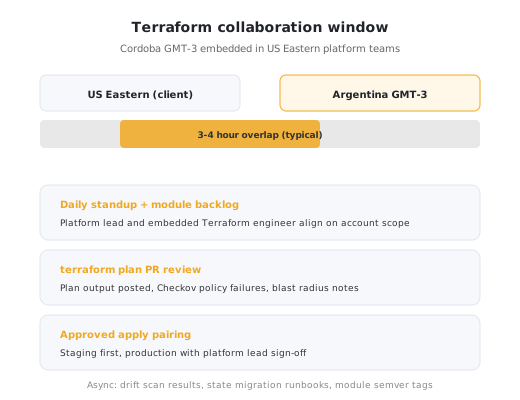
Most clients get 3-4 hours of direct overlap with US Eastern time for plan review, module pairing, and incident sync.
Prefer numbers before a call? Jump to monthly pricing bands for embedded seniors, pairs, and small IaC pods.
What Terraform engineers do in your platform team week to week
Infrastructure-as-code ownership between the architecture diagram and the apply approval, not a reprint of generic DevOps outsourcing copy.
"Senior Terraform engineer" means different things on different teams. In a typical month with us, an embedded engineer might refactor a monolithic root module into versioned child modules, split state for a new AWS account without destroying existing resources, wire Checkov policy failures into GitHub Actions plan gates, document import blocks for brownfield RDS instances, and rehearse rollback before a multi-tenant landing zone goes live. The diagram below is a schematic of those parallel tracks; your mix depends on backlog, account count, and audit pressure.
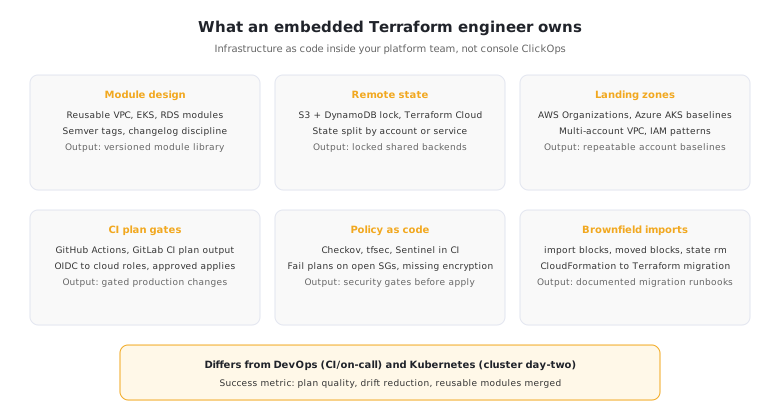
Module libraries and semver discipline
Reusable VPC, IAM, EKS, and RDS baselines with tagged releases and changelogs. We follow HashiCorp Terraform language conventions and your naming standards instead of copy-pasting root files per account.
Remote state and locking
S3 plus DynamoDB, Terraform Cloud, or your chosen backend with documented locking strategy. No shared apply without verified remote state; week one includes a read-only production plan before the first write.
CI plan and apply gates
Plan output posted on pull requests, approved applies to production, OIDC federation to cloud roles instead of long-lived keys. Serving is not "terraform apply from a laptop."
Drift detection and brownfield imports
Scheduled plan jobs, policy-as-code in CI, import blocks and moved blocks for resources that predate the repo. We reference Terraform Cloud documentation and AWS Terraform best practices when clients need structured governance language.
When companies hire Terraform engineers through us
Four buyer shapes cover most discovery calls; your situation may combine two.
Platform leads with multi-account sprawl
Staging and production live in separate AWS accounts, but the module library is a single root file nobody wants to touch. Staff aug is the bridge while you close an in-house platform hire, or it becomes the steady state when US funnel cost is not where you want margin to go.
CTOs inheriting ClickOps drift before an audit
SOC 2 or PCI evidence collection surfaced console changes that never hit a repository. You need a calm audit: which accounts are load-bearing, where state lacks locking, which resources need import blocks. The goal is a written map before anyone suggests a big-bang rewrite.
SaaS teams scaling tenant isolation in AWS
Multi-tenant architecture needs account-per-environment or account-per-tier baselines in HCL. Product velocity outpaced IaC hygiene. You need someone who can harden landing zone modules, tighten apply gates, and teach application teams what "done" means for infrastructure changes.
Head of platform without IaC bandwidth
Kubernetes and CI/CD already consume the calendar; twelve root modules wait for refactor. Staff augmentation adds execution capacity without reorganizing the department chart, including patterns similar to our Highside case study delivery discipline.
None of the above? Say so on the call. We turn down engagements when the fit is wrong, which keeps our bench credible.
Terraform State Integrity Test (locking, modules, drift)
A lightweight decision model buyers can reuse even if they never hire us.
Most mismatches on Terraform engagements come from hiring the wrong shape of senior: a strong greenfield provisioner who will not touch state surgery, or a "DevOps" generalist who has never split a monolithic state file under audit scrutiny. Before we shortlist, we score three signals with your platform lead on a thirty-minute call.
- Signal A: state locking. If two engineers cannot run terraform apply without corrupting shared state, remote backends with locking (S3 plus DynamoDB, Terraform Cloud, or equivalent) are minimum viable for any team larger than one. We overweight candidates who have recovered from a partial apply, not only those who provision tutorial VPCs.
- Signal B: module boundaries. If changing one service stack plans the entire monorepo and applies take forty minutes, blast radius is too wide. Terragrunt live folders, workspace-per-environment, or root-module-per-account patterns should limit what a single pull request touches.
- Signal C: drift detection. If incidents start as "staging looks wrong" instead of a scheduled plan diff or policy check failure, console changes outpace code. We prioritize engineers who have wired drift scanners or CI plan jobs that surface divergence before auditors do.
Across dozens of IaC staff aug engagements for teams in the US, Canada, and the UK, shortlists that used those three signals had the lowest swap rate. That is not a guarantee for your team; it is how we reduce guesswork before anyone signs a statement of work.
How Siblings vets Terraform candidates
Short, inspectable steps that end with you meeting the person who will commit.
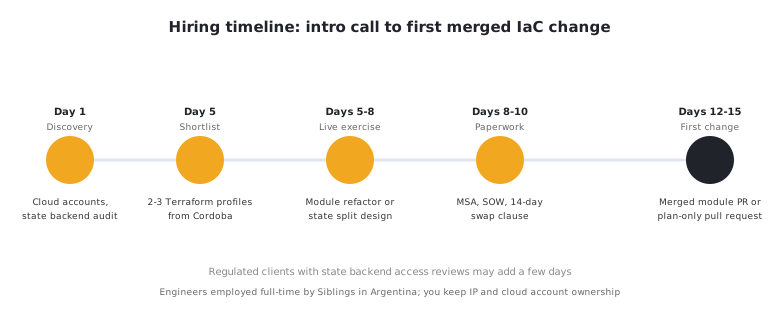
- Stack and risk map (day 1). Cloud choice, state backend, multi-account scope, regulated data boundaries, hard nos on tooling, budget envelope. We say no on the call when we are the wrong partner.
- Written scoping answer (days 2-4). Each finalist explains what they would not automate in the first sprint and which modules they would delete from an overgrown library. Buzzword lists without tradeoffs fail here.
- Shortlist (by day 5). Two or three profiles from our bench plus, when needed, engineers we have tracked for years who are finishing notice elsewhere. You receive repos, module diagrams where available, and state migration notes when shareable.
- Live exercise (days 5-8). Ninety minutes with your platform lead on a sanitised slice: module refactor with moved blocks, state split for a new account, or a plan that drifts only in staging because of a provider pin. No trivia wall.
- Paperwork (days 8-11). Master services agreement, monthly statement of work, fourteen-day swap clause in plain language.
- First merged IaC change (days 12-15). Onboarding pairs on a small, reversible module or plan-only pull request so you see integration speed, not slide decks.
Engagement models and monthly ranges
Published bands beat "contact us for a quote" when you are budgeting a quarter.
We publish ranges because hidden pricing wastes cycles. The point inside the band moves with seniority, how much stakeholder-facing English you need, and rare depth such as multi-account Organizations migrations or regulated audit support. Figures mirror our published US bands, adjusted for Argentina delivery economics.
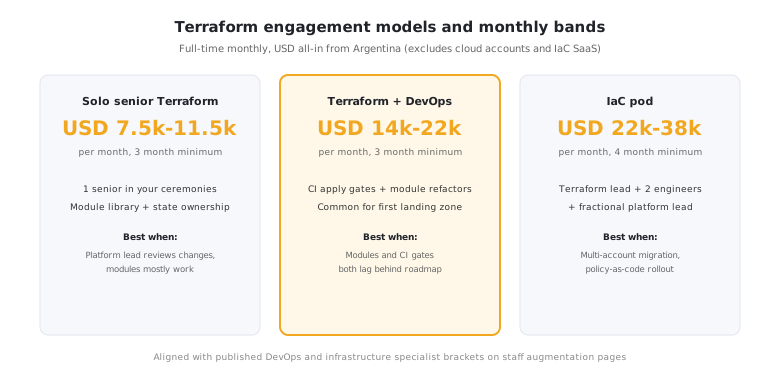
Embedded senior Terraform engineer
One senior in your ceremonies, plan reviews, and apply approvals where appropriate. Strong when your platform lead can prioritize and the module library mostly works.
Monthly: USD 7,500–11,500. Minimum: three months.
Terraform plus DevOps engineer
The Terraform senior sets module and state guardrails; the DevOps engineer absorbs CI apply gates and pipeline work once context lands, usually by week four. Common when landing zone push and CloudFormation import both lag.
Monthly: USD 14,000–22,000. Minimum: three months.
Small IaC pod (three to four engineers)
Covers vacations internally and can split between module library rebuild and a parallel policy-as-code or multi-account migration track under your lead. If you want a vendor-owned roadmap instead, dedicated team outsourcing is usually the better commercial shape.
Monthly: USD 22,000–38,000. Minimum: four months.
Figures include recruiting, benefits, laptops, and employer costs. Cloud accounts, Terraform Cloud or Spacelift seats, and policy scanner SaaS stay on your billing.
Terraform with us versus freelancer, in-house, or large offshore bench
Each option wins sometimes; pretending otherwise wastes your time.
Freelance marketplaces
Win on narrow spikes under roughly eighty hours. Lose on continuity, state discipline, and drift runbooks when the incentive is ticket throughput.
In-house hiring in the US or UK
Wins on five-year ownership. Loses on funnel length and regret cost when the hire misses at month six while apply incidents continue.
Large offshore agencies
Win when you need ten mid-level operators with a PM layer. Lose when the engineer in the interview is not the engineer in your Terraform repo, or when state surgery depth is change-order territory.
Where we sit
Small senior bench, GMT-3, full overlap with US Eastern hours, fifteen-day notice after the minimum, and the person you interview is the person who commits. That is the trade we optimize for.
Illustrative engagement (composite, anonymised)
A shape we have shipped multiple times; details blended to protect clients. Not a named case study.
US B2B SaaS: multi-tenant AWS landing zone from console sprawl
Context (illustrative). A vertical SaaS vendor serving mid-market customers ran workloads across four AWS accounts provisioned mostly from the console: shared networking, per-environment app stacks, and a legacy data account with hand-tuned security groups. Product wanted tenant-tier isolation (standard vs enterprise) without a three-month platform freeze. Internal DevOps owned CI/CD; no one owned HCL module boundaries or remote state.
What we did. One embedded senior Terraform engineer and one mid-level DevOps engineer over five months from Córdoba: stood up AWS Organizations with SCP guardrails, published eight reusable modules for VPC, EKS, RDS, and shared services, migrated state to S3 plus DynamoDB locking with workspace-per-environment, wired GitHub Actions plan gates with Checkov blocking open security groups, and documented import runbooks for twenty-three brownfield resources. Weeks one and two were read-only plans and module inventory, not hero applies.
Outcome (rounded composite). Largest stack plan runtime dropped from 42 minutes to 11 minutes after module splits; first new enterprise-tier account provisioned from code in nine business days; drift surfaced in scheduled plans instead of customer support tickets; SOC 2 infrastructure evidence export completed without a remediation letter. The internal platform team kept shipping application features in parallel.
Caveat. This is a composite of several SaaS-shaped engagements, not a single client quote. Your account count, compliance scope, and existing state layout will change the timeline. For a published reference with observability-heavy platform work, see the NetApp case study.
Risks of external Terraform staff and how we mitigate them
Honest controls beat "risk-free" slogans.
State corruption on week one
Mitigation: read-only production plan before first apply, verified locking and backend access, explicit moved blocks documented in the pull request.
Interview star, week-three stall
Mitigation: exercise on real module code, fourteen-day swap window, explicit day-fourteen check-in with your platform lead.
Knowledge leaves with the engagement
Mitigation: state migration runbooks, module upgrade notes, and import commands live in your wiki or repo, not a vendor portal.
Vanity landing zone work instead of drift reduction
Mitigation: monthly scorecard on three to five numbers your leadership tracks: plan runtime, drift incidents caught in CI, module reuse rate, apply success rate, cost per account baseline.
Why Siblings for Terraform staff augmentation
Small bench, direct access, no parallel sales organization inventing capacity.
30+
Engineers in-house
Córdoba-based team; fintech, health, collaboration, logistics clients
Dozens
IaC platform placements
Module libraries, state migrations, landing zones, regulated releases
GMT-3
Argentina overlap
Same-day with US East; workable with most US zones
We are deliberately not a fifty-person recruiting shop. Founders still review new Terraform engagements, and engineers talk to clients without a telephone game of account managers. That is why the process above stays short.
Reviewed by Javier Uanini, Founder & CEO, Siblings Software: technical discovery on Terraform engagements, pricing bands, and fit decisions.
Frequently Asked Questions
Senior and mid-senior Terraform engineers employed full-time by Siblings and embedded in your platform team. They join stand-ups, open pull requests in your infrastructure repositories, pair on module refactors, and document state migration runbooks. We cover recruiting, payroll, hardware, benefits, and Argentine employer obligations. You keep architecture direction, cloud account ownership, and intellectual property.
A single senior Terraform engineer is usually USD 7,500 to 11,500 per month all-in. A senior Terraform engineer plus a mid-level DevOps partner lands around USD 14,000 to 22,000 per month. A three-to-four seat IaC pod with shared platform context is typically USD 22,000 to 38,000 per month. Figures assume a full-time month, include recruiting and local taxes, and exclude your cloud accounts, Terraform Cloud or Spacelift seats, and policy scanner SaaS.
Most engagements reach a first production-safe Terraform pull request in roughly 12 to 15 business days: discovery on day one, a two-or-three-person shortlist by day five, a ninety-minute live module or state exercise before day nine, paperwork by day eleven, then onboarding with your platform lead. Regulated clients with stricter data-room requirements may add a few days.
We end on a live exercise drawn from production-shaped problems: refactoring a tangled root module into reusable child modules, designing a state split for a new AWS account, or fixing a plan that drifts only in staging because of a provider version pin. Candidates must explain what they would delete from an overgrown module library, not only what they would add. We replaced one placement in the last eighteen months, inside a fourteen-day free-swap window.
We staff all three and match on what you already run. AWS is the most common brief because of Organizations, VPC modules, and EKS baselines. Azure appears in enterprises with Entra ID and AKS landing zones. GCP fits data-heavy stacks with GKE and Shared VPC. We refuse to send an AWS-only profile when your brief says Azure unless they can show a recent multi-cloud migration.
Choose a solo senior engineer when you have a platform lead who can review every change and the module library mostly works. Choose a Terraform plus DevOps pair when CI apply gates and module refactors both lag. Choose a pod when you lack internal platform leadership, run a multi-account migration this quarter, or need module library, policy-as-code, and import work in parallel.
DevOps engineers own CI/CD pipelines, on-call, and broad infrastructure operations. Kubernetes developers focus on cluster day-two work, Helm, and ingress. Terraform engineers specialize in infrastructure as code: HCL module design, remote state, landing zone architecture, policy gates, and brownfield imports. Many platform teams need all three over time; this page is for the IaC gap when console clicks outpace version-controlled modules.
Our standards for Terraform work
What we hold ourselves to once embedded.
- State is locked before anyone applies. Remote backends, documented locking strategy, no shared apply from local laptops without your security sign-off.
- Modules are reusable and versioned. New accounts and environments consume tagged modules, not copy-pasted root files.
- Plans gate production. Every infrastructure change passes review with visible plan output before apply.
- Drift is detected in CI, not in audits. Scheduled plans or policy checks surface console divergence before evidence collection.
- Brownfield honesty. If an import will cost more than temporary console management, we say so before the sprint starts.
- Written artifacts. State migration runbooks, module upgrade paths, and incident notes that survive team changes.
Contact Siblings Software Argentina
Describe your cloud accounts, state backends, and IaC timeline. We reply within one business day, or tell you we are not the right partner.