Hire Kubernetes developers for production cluster operations
· Typical time to first production cluster change: 12 to 15 business days
If you are comparing hire Kubernetes developers options, you probably need three things on one page: what will actually change in your clusters, what it costs per month in plain numbers, and how you avoid the contractor who disappears the week before a control plane upgrade. This page answers those directly. We staff Kubernetes operations from Argentina with full-time engineers who overlap US Eastern business hours and work inside your repos, not a parallel shadow cluster.
Kubernetes in 2026 is not a certificate on a resume. Teams run EKS, GKE, or AKS with Helm or Kustomize, tune HPA and pod security baselines, and still fear the minor version bump that breaks ingress or cert rotation. We match that reality: engineers who have staged upgrades, fixed readiness probes that lied in production, and read upstream Kubernetes docs instead of blog folklore. For broader platform roles see DevOps engineer staff augmentation; when namespace-level cost and chargeback need dedicated ownership, see FinOps engineer staff augmentation; when SLOs, error budgets, and on-call rotation need dedicated ownership, see SRE engineer staff augmentation; when EKS baselines and VPC modules need dedicated IaC ownership first, see Terraform engineer staff augmentation; for timezone context read nearshore developer hiring; for multi-stack bench depth see software developer staff augmentation.
When evaluating vendors, ask for a live exercise on your cluster shape, published monthly bands, and a clear answer on when a small pod beats one senior. If you need full delivery ownership rather than individuals embedded in your rituals, compare platform engineering outsourcing or DevOps engineering outsourcing from the same leadership team.
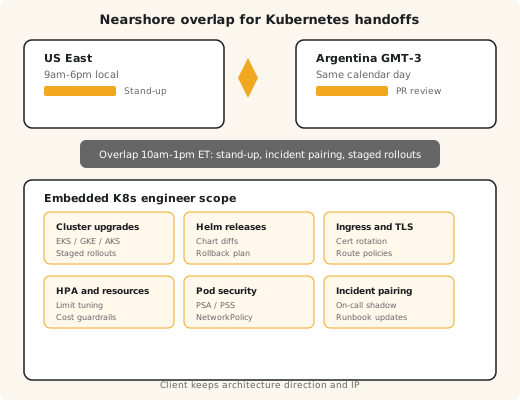
Most clients get 3-4 hours of direct overlap with US Eastern time for stand-ups, incident pairing, and staged rollouts.
Prefer numbers before a call? Jump to monthly pricing bands for embedded seniors, pairs, and small pods.
What Kubernetes developers do in client teams
Day-two cluster work, not a reprint of the platform engineering homepage.
"Senior Kubernetes engineer" is overloaded. In a typical month with us, an embedded engineer might stage a control plane upgrade, refactor a Helm chart so values stop diverging between environments, tune HPA for a service that thrashed on CPU alone, pair on a rollout stuck at maxUnavailable, and document the ingress TLS path auditors ask about. The diagram below is a schematic of those parallel tracks; your mix depends on cluster age, tenant count, and risk tolerance.
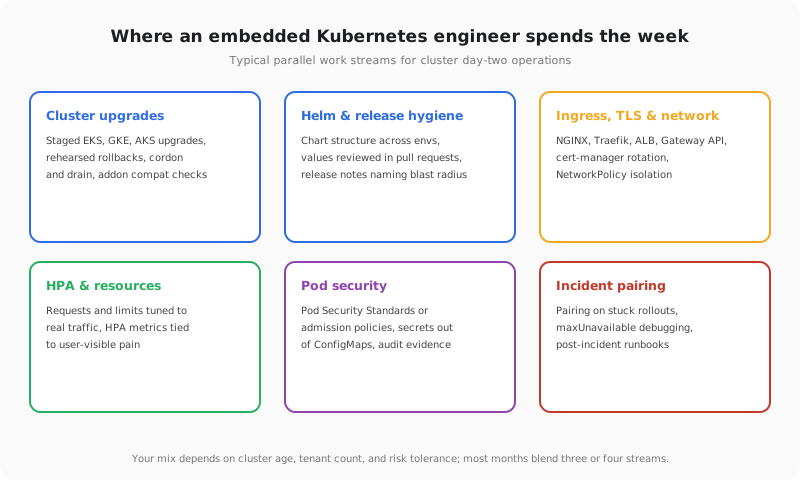
Cluster upgrades and node lifecycle
Staged EKS, GKE, or AKS upgrades with rehearsed rollbacks, cordon and drain discipline, and addon compatibility checks before anyone promises a weekend cutover. We follow vendor runbooks and CNCF guidance where it applies, not one-size-fits-all playbooks.
Helm, Kustomize, and release hygiene
Chart structure that survives more than one environment, values review in pull requests, and release notes that name blast radius. Deliverables include diffable manifests, rollback commands, and ownership tags your platform lead can audit.
Ingress, TLS, and network policy
NGINX, Traefik, AWS Load Balancer Controller, or Gateway API routes with cert-manager rotation that does not surprise finance at renewal. NetworkPolicy and service mesh boundaries where isolation matters, documented so application teams know what they can change.
HPA, resources, and pod security
Requests and limits that match real traffic, HPA metrics that reflect user pain, Pod Security Standards or admission policies aligned with your compliance frame, and rollout strategies that fail for real defects instead of hiding behind maxSurge defaults.
Tools we meet most often: kubectl and cluster APIs, Helm 3, Argo CD or Flux where GitOps is already chosen, Prometheus or cloud-native metrics for capacity work, and your existing incident channel. We align with the Google SRE idea that toil should shrink over time, not become permanent heroics around every deploy.
When companies hire Kubernetes developers through us
Four buyer shapes cover most discovery calls; your situation may combine two.
Platform leads deferring a risky upgrade
Production on Kubernetes 1.26 or older, vendor support windows closing, and one internal senior who also owns on-call. Staff aug is the bridge to staged EKS or GKE upgrades without betting a single maintenance window on folklore.
CTOs inheriting clusters built by consultants
Helm charts copied from tutorials, ingress that works until it does not, no written rollback path. The goal is a calm audit: what is load-bearing, what breaks cert rotation, which namespaces violate pod security before anyone suggests a greenfield cluster.
Product teams outgrowing one cluster admin
Microservices multiplied; HPA and resource requests did not. You need someone who can harden rollouts, teach developers what "done" means for cluster changes, and keep ingress stable while feature teams ship weekly.
Regulated environments with cluster evidence gaps
SOC 2, HIPAA, or financial audit windows approaching. You need change logs from Git to cluster, pod security baselines, and tested restore paths, not a diagram of "cloud native maturity." We embed engineers who have shipped under those constraints on managed Kubernetes.
None of the above? Say so on the call. We turn down engagements when the fit is wrong, which keeps our bench credible.
Cluster Operations Readiness Gate
A lightweight vetting framework buyers can reuse even if they never hire us.
Most mismatches on Kubernetes engagements come from hiring a strong application developer who has only clicked through a managed console, or a "DevOps" generalist who has never owned a failed rollout at 2 a.m. Before we shortlist, we score three signals with your platform lead on a thirty-minute call.
- Signal A: upgrade debt. If the control plane is more than two minor versions behind or node groups mix generations, we overweight candidates who have led staged upgrades on your cloud (EKS, GKE, or AKS) and can show rollback rehearsal, not slide-deck timelines.
- Signal B: release fragility. If deploys fail on readiness probes, Helm hooks, or init container ordering, we prioritize engineers who debug rollouts from events and logs, tune HPA and resources from real traffic, and document the fix in the chart repo.
- Signal C: security and tenancy boundary. If auditors ask about pod security, network isolation, or secrets in manifests, we bias toward operators who enforce Pod Security Standards or admission policies and can explain tradeoffs to application teams without blocking every pull request.
Across dozens of cluster-shaped staff aug engagements for teams in the US, Canada, and the UK, shortlists that used those three signals had the lowest swap rate. That is not a guarantee for your team; it is how we reduce guesswork before anyone signs a statement of work.
Engagement models and monthly USD bands
Published bands beat "contact us for a quote" when you are budgeting a quarter.
We publish ranges because hidden pricing wastes cycles. The point inside the band moves with seniority, how much stakeholder-facing English you need, and rare depth such as multi-cluster upgrades, regulated audit support, or service mesh operations.
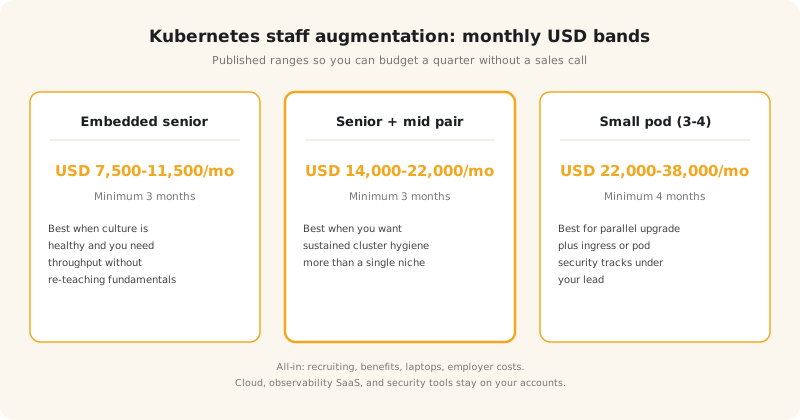
Embedded senior
One senior in your ceremonies, change reviews, and on-call rotation where appropriate. Strong when your culture is healthy, you have one primary cluster family, and you need throughput without re-teaching fundamentals.
Monthly: USD 7,500 to 11,500. Minimum: three months.
Senior + mid pair
The senior sets upgrade and rollout guardrails; the mid-level absorbs Helm and ingress tickets once context lands, usually by week four. Common when you want sustained cluster hygiene more than a single niche.
Monthly: USD 14,000 to 22,000. Minimum: three months.
Small pod (three to four engineers)
Covers vacations internally and can split between a multi-step upgrade track and parallel ingress or pod security work under your lead. If you want a vendor-owned roadmap instead, dedicated platform team outsourcing is usually the better commercial shape.
Monthly: USD 22,000 to 38,000. Minimum: four months.
Figures include recruiting, benefits, laptops, and employer costs. Cloud, observability SaaS, and security tools stay on your accounts.
Hiring process timeline
Short, inspectable steps that end with you meeting the person who will commit to your cluster repos.
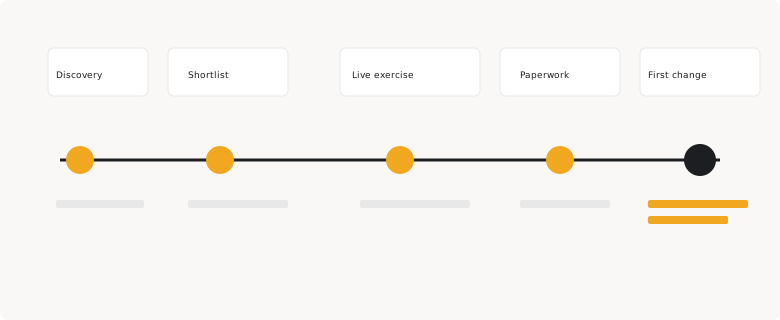
- Discovery (day 1). Cluster versions, cloud provider, Helm or GitOps layout, on-call topology, upgrade calendar, budget envelope. We say no on the call when we are the wrong partner.
- Shortlist (by day 5). Two or three profiles from our bench plus, when needed, engineers we have tracked for years who are finishing notice elsewhere. You receive chart samples, incident write-ups where available, and a written answer to a scoped cluster operations question.
- Live exercise (days 5 to 8). Ninety minutes with your platform lead on a sanitised slice of work: stuck rollout, Helm values drift, or ingress TLS regression. No trivia wall.
- Paperwork (days 8 to 10). Master services agreement, monthly statement of work, fourteen-day swap clause in plain language.
- First production cluster change (days 12 to 15). Onboarding pairs on a small, reversible change so you see integration speed, not slide decks.
Kubernetes staff aug versus freelancer, in-house, or agency bench
Each option wins sometimes; pretending otherwise wastes your time.
Freelance marketplaces
Win on narrow spikes under roughly eighty hours: one chart fix, one ingress rule. Lose on continuity, upgrade rehearsal, and on-call runbooks when the incentive is ticket throughput across unrelated clients.
In-house hiring in the US or UK
Wins on five-year ownership of your cluster standards. Loses on funnel length and regret cost when the hire misses at month six while a control plane upgrade deadline does not move.
Large offshore agencies
Win when you need ten mid-level operators with a PM layer. Lose when the engineer in the interview is not the engineer in your Helm repo, or when staged EKS upgrades become change-order territory.
Where we sit
Small senior bench, GMT-3, full overlap with US Eastern hours, fifteen-day notice after the minimum, and the person you interview is the person who commits. That is the trade we optimize for.
Composite scenarios (anonymised, rounded numbers)
Shapes we have shipped multiple times; details blended to protect clients.
EKS upgrade with zero big-bang weekend
US fintech on Kubernetes 1.27, terrified of ingress regressions after a prior failed cutover. Embedded senior staged node groups, rehearsed rollbacks on a shadow namespace, and moved production across three maintenance windows. Sev-1 cluster pages dropped from three per quarter to zero over two quarters in the composite retelling.
Helm and pod security before SOC 2
UK SaaS with hand-edited values files and privileged pods in production namespaces. Six-week engagement: chart boundaries, Pod Security Standards enforced via admission, secrets removed from ConfigMaps, evidence packet for auditors. Deploy frequency recovered without freezing the product roadmap.
Mini case study
Secure collaboration platform: rollout time down 52%, audit findings closed
One senior, five months, anonymised metrics from a real engagement pattern.
Context. Encrypted collaboration product (same shape as our HighSide case study), EKS for core services, Helm for releases, eight internal engineers. Rollouts took most of an afternoon; security reviewers flagged manual kubectl steps and weak traceability from chart version to running pods.
What we did. Weeks one and two were cluster instrumentation and release mapping: rollout health checks, Helm promotion gates, and pairing on the smallest reversible changes. We refactored charts for environment parity, tightened ingress TLS rotation, and aligned HPA with measured traffic. Three focused pull requests across weeks four to eight, each with rollback notes aimed at regression classes auditors actually ask about.
Outcome. Median rollout time fell 52% from the week-one baseline; failed rollouts dropped from roughly one in four releases to one in eleven; two moderate audit findings closed with evidence the client could reuse. The internal team kept shipping product work in parallel.
Caveat. Weeks one and two looked slow if you measure hero commits only. That trade is explicit: we optimize for compounding cluster reliability, not dashboard theater.
At a glance
Stack: EKS, Helm, NGINX ingress, Datadog
Rollout time: -52%
First prod change: 14 days
Risks of external Kubernetes staff and how we mitigate them
Honest controls beat risk-free slogans.
Interview star, week-three stall on upgrades
Mitigation: live exercise on real cluster code, fourteen-day swap window, explicit day-fourteen check-in with your platform lead.
Shadow kubectl access outside change control
Mitigation: our engineer joins your change reviews both directions; we refuse engagements where cluster changes bypass your Git and approval flow.
Knowledge leaves with the engagement
Mitigation: runbooks for upgrades and rollbacks we touch, chart README updates, handover notes at month three even if you extend.
Vanity mesh work instead of rollout metrics
Mitigation: monthly scorecard on three to five numbers your leadership tracks: rollout success rate, time to recover failed deploys, upgrade debt in minor versions, cluster cost per tenant.
Why Siblings for Kubernetes staff augmentation
Small bench, direct access, no parallel sales organization inventing capacity.
30+
Engineers in-house
Cordoba-based team; fintech, health, collaboration, logistics clients
Dozens
Cluster-shaped placements
EKS, GKE, AKS, Helm, ingress, upgrades, regulated releases
GMT-3
Argentina overlap
Same-day with US East; workable with most US zones
We are deliberately not a fifty-person recruiting shop. Founders still review new Kubernetes engagements, and engineers talk to clients without a telephone game of account managers. That is why the process above stays short.
Reviewed by Javier Uanini, Founder & CEO, Siblings Software: technical discovery on Kubernetes engagements, pricing bands, and fit decisions.
Frequently Asked Questions
Senior Kubernetes engineers employed full-time by Siblings and embedded in your platform team. They join your stand-ups, open pull requests in your cluster and Helm repositories, pair on incidents in your paging rotation, and work in your Slack or Teams. We cover recruiting, payroll, hardware, benefits, and Argentine employer obligations. You keep architecture direction, change management, and intellectual property. Typical scope spans EKS, GKE, or AKS day-two operations, Helm releases, ingress and certificate management, HPA and resource tuning, pod security standards, cluster upgrades, and runbooks for rollout failures.
A single senior Kubernetes engineer is usually USD 7,500 to 11,500 per month all-in. A senior plus mid pair lands around USD 14,000 to 22,000 per month. A three-to-four person pod with shared cluster context is typically USD 22,000 to 38,000 per month. Figures assume a full-time month, include recruiting and local taxes, and exclude your own cloud, observability SaaS, and paid security tooling so you keep billing and data custody.
Most engagements reach a first production-safe cluster change in roughly 12 to 15 business days: discovery on day one, a two-or-three-person shortlist by day five, a ninety-minute live exercise on real Helm or rollout code before day eight, paperwork by day ten, then onboarding with your platform lead. If you already interviewed a candidate we employ under an employer-of-record path, we can compress the middle steps toward seven to nine days.
We end on a live exercise drawn from production-shaped cluster problems: a Helm upgrade that fails only in staging, a rollout stuck because readiness probes disagree with startup timing, or an ingress change that breaks TLS for one tenant. We publish a short written answer to a scoped cluster operations question before the call so you see reasoning, not buzzwords. In the last eighteen months we replaced two Kubernetes placements, both inside a fourteen-day free-swap window.
A solo senior fits steady-state operations, one cluster family, and a platform lead who can review every change. A pod wins when you are running parallel tracks: a multi-step EKS upgrade while Helm charts need refactoring, ingress migration, and pod security baseline work at the same time. Pods also cover vacation and on-call gaps without pausing upgrade windows. If you only need CI/CD or broad Terraform work without cluster ownership, compare our DevOps engineer staff augmentation lane instead.
Freelancers fit narrow scopes under roughly eighty hours. For ongoing cluster work they optimize for utilization, which often starves Helm hygiene, upgrade rehearsal, and on-call runbooks. Our engineers are full-time employees in one time zone with a fifteen-day notice period after the minimum term, a fourteen-day swap window, and an explicit expectation to do unglamorous maintenance alongside roadmap work.
We replace the engineer at no placement fee during the first fourteen days and cover reasonable handover overlap. After that, either side may exit with fifteen days notice. We track fit with a simple day-fourteen question to your platform lead so quiet failure modes do not drift for a quarter.
Our standards for Kubernetes work
What we hold ourselves to once embedded.
- Upgrades are rehearsed. Rollback paths tested on non-production, addon compatibility checked, maintenance windows sized to real drain times.
- Helm and manifest changes are reviewable. Diff posted, blast radius stated, rollback command named before merge.
- Rollouts fail for the right reasons. Readiness and liveness probes match startup behavior; HPA metrics tied to user-visible load, not vanity CPU graphs.
- Ingress and certs are owned. Rotation schedules documented, TLS versions aligned with compliance, no surprise expiry pages.
- Pod security is enforced, not suggested. Baselines via Pod Security Standards or admission policies; privileged workloads require explicit approval.
- Written artifacts survive turnover. Runbooks for upgrades and rollbacks, chart READMEs, incident notes that change the system.
Contact Siblings Software Argentina
Describe your cluster versions, cloud provider, and upgrade calendar. We reply within one business day, or tell you we are not the right partner.