Outsource a .NET pod that survives Framework 4.x strangler work and ships on your Azure pipeline
· Typical time to first merged PR: 10 to 14 days
Reviewed by Javier Uanini, CEO and delivery lead, Siblings Software.
If you are reading this, you probably have a multi-quarter .NET roadmap, a mix of modern ASP.NET Core and load-bearing .NET Framework, and nobody inside who wants to own release hygiene, EF tuning, and Azure cost surprises at the same time. A dedicated .NET team from Siblings is the shape we use when you need a managed unit, not a lone contractor: tech lead, senior C# engineers, DevOps, QA inside the sprint, and a delivery lead on your ceremonies. We run the squad from Córdoba, Argentina (GMT-3) under our dedicated teams practice.
This page is intentionally specific: who buys this, what the first thirty days look like, published monthly bands, the Framework Fork Test, and when .NET staff augmentation is the cheaper right answer instead. “Most buyers we see in 2026 are not debating whether to use .NET,” notes Javier Uanini; “they are debating who owns the strangler path while production keeps shipping.”
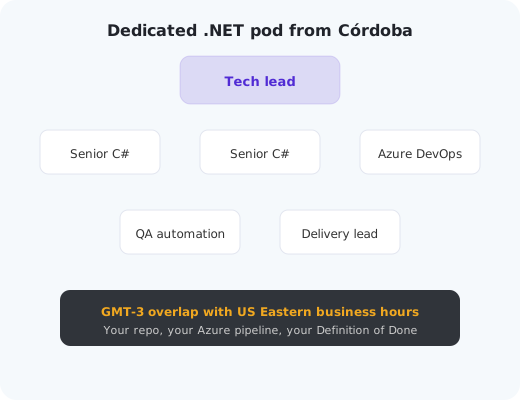
Who hires a dedicated .NET team (not staff aug)
Four patterns cover most signed .NET pod engagements since 2024.
Framework and Core share one backlog
Industrial ERP, insurance, and logistics apps still run WCF or WebForms beside new .NET 8 microservices. You need a squad that plans strangler slices, not a rewrite slide deck.
Azure bill and release cadence both stalled
Pipelines exist but deployments are scary, EF queries regressed, and observability is an afterthought. A pod owns Definition of Done including staging deploy and alert runbooks.
Mobile shell depends on .NET APIs
Xamarin or MAUI clients need stable auth and billing APIs. We cross-staff with our Xamarin dedicated teams when mobile and backend must not bounce between vendors.
Procurement wants one accountable pod
Staff aug dropped individuals into your chain but nobody owned QA pairing or sprint goal attainment. Dedicated teams trade headline hourly savings for continuity and a tech lead on the hook.
If you only need one senior for eight weeks, see .NET staff augmentation or scoped project-based work instead.
The Framework Fork Test
We publish this checklist so buyers can self-diagnose before the discovery call. Three honest yes answers mean proceed with a dedicated pod. Any no means staff augmentation or a narrower fixed scope first.
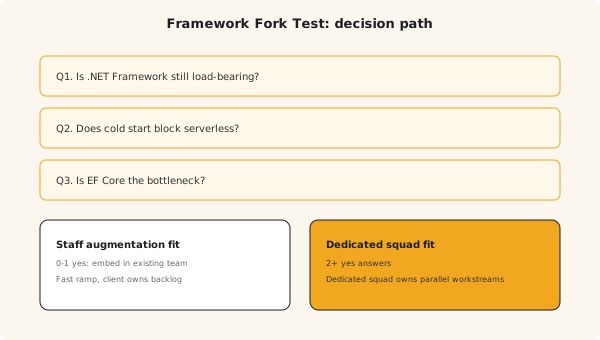
Q1. Is .NET Framework still load-bearing?
If WCF or WebForms remain, plan strangler migrations, not big-bang rewrites.
Q2. Does cold start block serverless?
.NET native AOT changes the serverless calculus for ASP.NET APIs.
Q3. Is EF Core the bottleneck?
Measure query plans before blaming the language choice.
For pure C# application work without platform transformation, our dedicated C# teams page covers ASP.NET Core squads with a different fit matrix.
Monthly pricing bands (published, not hidden behind a form)
.NET work is lumpy: one EF migration can burn a week. Publishing ranges upfront filters mismatched RFPs. Final quotes move inside these brackets based on regulated controls, multi-environment complexity, and optional MAUI engineers.
Lean pod
Tech lead plus two seniors and shared QA. Best for sustained feature work on an existing ASP.NET Core stack.
Band: USD 12k to 22k per month. Minimum: 3 months.
Standard pod
Six to eight people with full leadership stack plus DevOps or SRE as needed. Owns strangler work and release trains.
Band: USD 24k to 42k per month. Minimum: 3 months.
Program
Multiple pods with shared platform bench. For enterprises with parallel audit and compliance gates.
Band: USD 45k to 60k+ per month. Minimum: 4 months.
Azure spend, third-party licences, and penetration-test vendors stay on your accounts. Compare delivery philosophy on our .NET development outsourcing overview.
Your first thirty days
Days 1 to 5
Discovery, access, architecture read, and a written team proposal with sprint-zero goals.
Days 6 to 12
Interviews, security onboarding, CI and observability wired, Definition of Done agreed.
Days 13 to 21
Sprint zero completes: first merges to staging, test harness green, runbook draft for top alerts.
Days 22 to 30
Sprint one delivery against an agreed goal. Weekly demo and retro with your stakeholders.
External references we cite in sprint zero include Microsoft .NET docs, ASP.NET Core, and OWASP Top Ten.
Example engagement shape
Steelbridge Manufacturing (composite). Industrial ERP extensions on .NET Framework 4.8 with new .NET 8 microservices. Six-person pod delivered inventory API on ASP.NET Core with AOT pilot. Batch p95 dropped from 9.1s to 1.3s, zero IIS downtime during cutover. USD 38k per month.
What we would do differently: share validation libraries across Framework and Core early. Duplicated rules caused audit findings.
Published case study for a related distributor portal engagement.
Frequently Asked Questions
Run the Framework Fork Test on the discovery call. If two or three answers point to sustained ownership of architecture, release hygiene, and QA inside the sprint, a pod with delivery lead beats adding individuals. Use staff augmentation when you already have a strong tech lead who only needs extra senior hands.
The Framework Fork Test is the named checklist our .NET pods use before committing scope. Q1: Is .NET Framework still load-bearing? If WCF or WebForms remain, plan strangler migrations, not big-bang rewrites. Q2: Does cold start block serverless? .NET 9 native AOT changes the serverless calculus for ASP.NET APIs. Q3: Is EF Core the bottleneck? Measure query plans before blaming the language choice.
Discovery takes three to five days, interviews five to seven days, sprint zero in week two or three. Most pods merge first production changes by week four. Enterprise legal can stretch contract signing; we say that upfront instead of marketing fantasy dates.
Small pods run USD 12,000 to 22,000 per month. Full product pods run USD 24,000 to 42,000. Multi-pod programs run USD 45,000 to 60,000 or more. All brackets include delivery leadership and a two-week satisfaction guarantee on each seat.
Your product owner sets priorities. Our tech lead owns code review SLAs, Definition of Done, and release readiness. Delivery lead runs ceremonies and weekly status. We document architecture decisions in short ADRs inside your repository.
Adding seats takes one to two weeks. Scaling down requires thirty-day notice after the initial three-month commitment period.
Yes. Engagements start with a mutual NDA and a Master Services Agreement that assigns source code, derivative works, and deliverables to you on payment. We work inside your repositories and cloud accounts.
OUR STANDARDS
Measured outcomes over slide decks. Reversible changes over heroic releases.
- Definition of Done is non-negotiable. Peer review, automated tests, observability hooks, and staging deploy before a story closes.
- Strangler slices over big-bang. Framework and Core coexist with shared validation libraries documented week one.
- Honest Azure math. Cost and cold-start tradeoffs written down before serverless commitments.
- Escalation in one business day. Engineer to tech lead to delivery lead to your engineering director.
Contact Siblings Software Argentina
Send Framework version mix, Azure footprint, and squad size target; we reply within one business day.