Hire a Dedicated App Development Team
· Typical sprint one start: 2 to 3 weeks
Reviewed by Javier Uanini, CEO and delivery lead at Siblings Software.
Hire an app development team through Siblings Software when you need a nearshore squad that owns product delivery across iOS, Android, or cross-platform surfaces. We help CTOs, product leaders, and engineering managers in the US and Canada add a dedicated pod from Cordoba, Argentina with clear sprint ownership, device QA, and store release discipline.
This page covers when a dedicated app squad is the right model, how we compose the team, what the first 30 days look like, monthly pricing bands, risks to plan for, and how this compares with staff augmentation or hiring in-house. If you only need individuals embedded in your rituals, start with hire app developers.
When a dedicated app team makes sense
Buyers usually arrive with a delivery gap, not a blank idea.
Roadmap outgrew one mobile hire
Feature work, store submissions, and crash triage now compete for the same people. A dedicated squad gives separate ownership for engineering, QA, and release readiness.
Brownfield app needs stabilization
Crash rates, rejected builds, or fragile CI are blocking roadmap work. The first month focuses on pipelines, dependency risk, and a release scorecard before velocity claims.
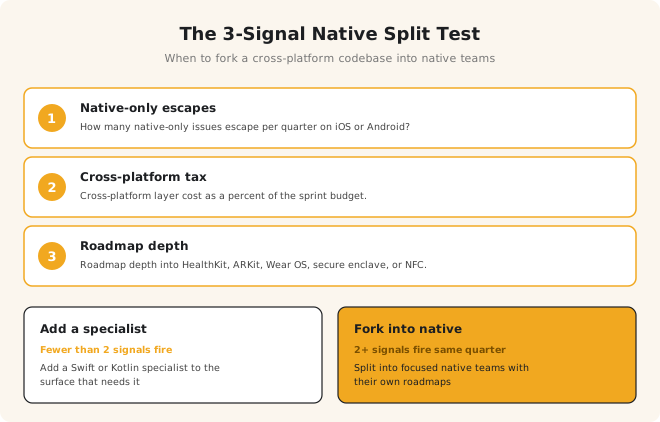
Native and cross-platform tradeoffs are unclear
Leadership needs a decision with cost, hiring, and platform-depth tradeoffs written down. We run that decision with your product and engineering owners before locking stack choices.
Internal leadership is thin on mobile
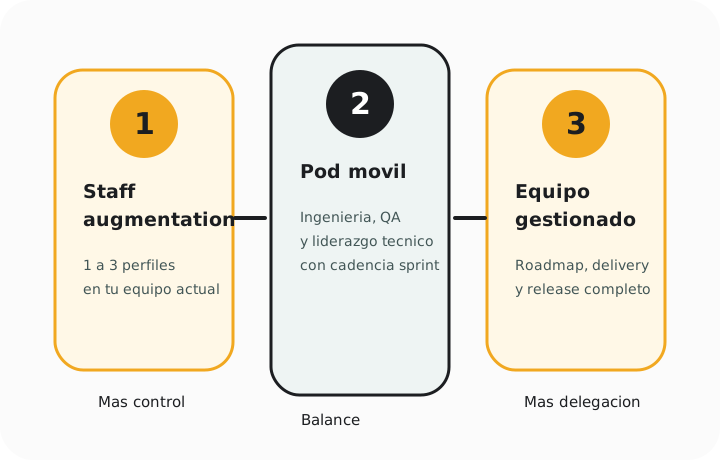
Staff augmentation works when your tech lead already owns the stream. A dedicated team fits when Siblings must own cadence, quality gates, and store accountability.
Standard team composition
Composition follows the surface you ship, not a one-size org chart.
Lean pod
Technical lead plus two to three engineers and shared QA. Fits a single platform lane or a focused cross-platform slice with active internal product ownership.
Product squad
Tech lead, iOS and/or Android or cross-platform engineers, QA, and delivery management. Best when backlog shaping and store releases need weekly accountability.
Multi-platform setup
Parallel native lanes plus shared product or platform support when iOS and Android roadmaps cannot share one bottlenecked team.
Platform-specific pods are available when the buyer already knows the surface: iOS, Android, cross-platform, mobile, or Windows.
First 30 days
The goal is a working operating rhythm, not a slide deck.
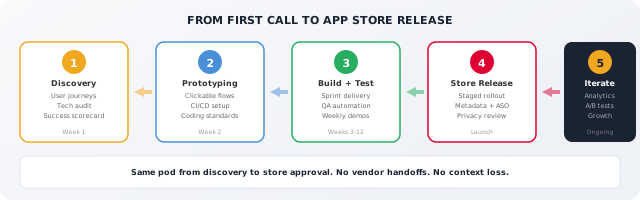
Days 1 to 5
Discovery, codebase and store-account access, crash and rejection history review, success scorecard draft.
Days 6 to 12
Team onboarding, CI/CD baseline, definition of done, device matrix, and communication channels in your tools.
Days 13 to 21
Sprint zero with one delivery slice, release checklist, and observability hooks for crash and adoption signals.
Days 22 to 30
Sprint one outcomes, store readiness review, and governance calibration with your product owners.
Governance and communication
Nearshore overlap matters when store decisions cannot wait overnight.
Working rhythm
Teams in Cordoba, GMT-3, overlap US Eastern and Central hours for planning, demos, and release triage. We work in your Slack, Jira or Linear, and Git host so status lives where your team already looks.
Decision hygiene
Sprint goals are written in one sentence. Release readiness reviews name owners for binary quality, privacy metadata, staged rollout, and rollback. Stakeholders get a weekly narrative tied to those goals, not story-point inflation.
For the broader dedicated-team catalog and staffing options, see our outsource development team hub. When the engagement is closer to a fixed milestone than a standing squad, compare project-based outsourcing.
Quality standards and store release controls
Store submissions are treated as product events, not end-of-sprint chores.
Engineering bar
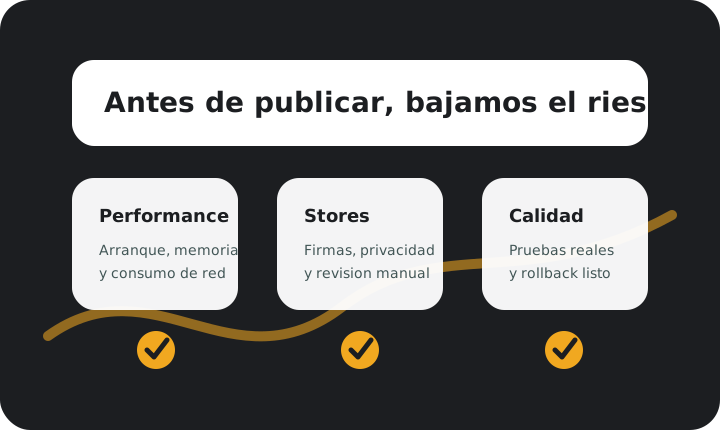
PR review, automated tests where they catch regressions, crash monitoring, and performance budgets on real devices before a release candidate is called ready.
Store compliance
Checklists aligned with the Apple App Store Review Guidelines and Google Play policies, including privacy labels and metadata review before submission.
Release controls
Staged rollouts, feature flags when available, and a written rollback path so a bad build does not become a week-long recovery exercise.
For managed mobile outsourcing without a standing dedicated-team contract, see app development outsourcing and the mobile app development services page.
Pricing model
Monthly bands track squad size, platform coverage, and delivery ownership.
Lean pod
USD 12,000 to 22,000 per month. Focused delivery where your product owner stays hands-on and one platform lane dominates.
Product squad
USD 24,000 to 42,000 per month. End-to-end execution with stable sprint and store-release rhythm.
Multi-platform program
USD 45,000 to 60,000 plus per month. Parallel surfaces, heavier QA matrix, and tighter release coordination.
Price drivers include platform count, brownfield vs greenfield complexity, QA device coverage, and whether product or UX capacity sits inside the squad. Exact quotes follow a short discovery call.
Example engagement
Composite example based on recurring dedicated-app delivery patterns. Not a named client case study.
A mid-market product company needed one accountable squad for an existing consumer app with unstable release cadence. The pod started with a pipeline and crash-health review, locked a release readiness checklist, and took ownership of sprint goals across one native lane plus shared API coordination. After the first month, store submissions followed a repeatable review, and feature work resumed against a prioritized backlog instead of ad-hoc hotfix cycles.
For published product stories with named contexts, browse our case studies.
Risks and how we reduce them
Store rejection loops
Mitigation: privacy and metadata review before every submission, staged rollouts, and a named owner for each store checklist item.
Velocity without quality
Mitigation: definition of done includes device coverage and crash monitoring. Stories do not close on "works on my simulator" alone.
Wrong stack choice
Mitigation: native vs cross-platform decision before heavy investment, using roadmap depth and platform-specific requirements as inputs.
Knowledge trapped in the vendor
Mitigation: work in your repos and tools, documented architecture decisions, and handover notes as part of each milestone.
Comparison against alternatives
Vs in-house hiring
In-house remains the right long-term path for core product ownership. A dedicated squad reduces time to a working release rhythm when local hiring would take quarters.
Vs freelancers
Freelancers can ship isolated features. They rarely cover store operations, device QA, and sustained sprint accountability as one unit.
Vs staff augmentation
Augmentation fits mature internal mobile leadership. Dedicated teams fit buyers who need stream ownership. Compare also nearshore staff augmentation.
Frequently Asked Questions
A typical app squad includes a technical lead, iOS and/or Android engineers or cross-platform engineers, QA for device and store coverage, and delivery management. Larger pods add product or UX support when backlog shaping and release readiness need dedicated ownership.
Lean pods usually run USD 12,000 to 22,000 per month. Product squads generally run USD 24,000 to 42,000. Multi-platform programs with parallel iOS, Android, and shared platform work typically run USD 45,000 to 60,000 or more.
Discovery usually takes three to five business days, team setup takes five to ten days, and sprint zero starts in week two or three. Most buyers see the first demo-ready increment around week three or four, depending on repo access and store account readiness.
Choose staff augmentation if your internal mobile leadership is already strong and you only need extra implementers. Choose a dedicated team when you need Siblings to own sprint cadence, quality gates, and store release accountability.
Yes. We start with a health check on build pipelines, dependency risk, crash analytics, store rejection history, and backlog quality. Stabilization work usually lands before net-new feature velocity so release risk stays visible.
We score native and cross-platform options against performance needs, platform-specific roadmap depth, hiring velocity, and total cost of ownership. The recommendation follows those constraints instead of a default framework preference.
Release readiness reviews cover binary quality, privacy manifests, metadata, staged rollout plans, and rollback criteria. We align submissions with Apple App Store Review Guidelines and Google Play policies before each store push.
OUR STANDARDS
Store-ready delivery with clear ownership and measurable release discipline.
App quality shows up in crash rates, review outcomes, and how calmly a team ships under deadline pressure. We prioritize release readiness, device-level verification, and transparent governance over demo-driven velocity.
A feature is done when it is tested on real devices, documented for the next engineer, and ready for a staged store rollout with a rollback path.
Contact Siblings Software Argentina
Tell us about your app surfaces, store constraints, and whether you need a lean pod or a multi-platform squad. Prefer the US host? Use siblingssoftware.com for the .com version of this page.