Case study · Argentina marketplace MVP
Boca en Boca
Boca en Boca Case Study: Local Trust Platform from Argentina
In Argentina, hiring a plumber, tutor, or electrician still starts the same way it did before apps existed: someone you trust mentions a name de boca en boca, you save the contact, and the conversation continues on WhatsApp. Boca en Boca turns that informal loop into a structured PWA where consumers can search by rubro and zone, read non-anonymous reviews, and reach providers through contact paths that match local habits.
Siblings Software built the MVP from our Argentina delivery team under a project-based outsourcing model. The goal was not to clone a generic international marketplace. It was to ship a credible, admin-ready product that respects how recommendations actually work in Cordoba, Buenos Aires, and other cities where word-of-mouth still drives service decisions. You can review the live build at bocaenboca.vercel.app.
Project Snapshot
Boca en Boca is a mobile-first PWA for discovering service providers through searchable profiles, traceable contact actions, and moderated reviews. Providers manage up to three rubros and configure how they want to be reached. Administrators govern categories, content, banners, and review moderation without a development ticket for every operational change.
Delivery from Argentina mattered because rubros, barrios, WhatsApp handoffs, and phone verification shape authentication, onboarding, and admin workflows. Our team encoded those behaviors while keeping the codebase ready for later expansion.
- Delivery partner: Siblings Software, Argentina
- Solution type: PWA marketplace for trusted local service recommendations
- Primary market: Argentina service discovery and provider reputation
- Related services: web development, project-based outsourcing
- Argentina office: Cordoba delivery team
- More examples: all case studies, Bari case study
MVP at a glance
- Installable PWA with mobile-first search
- Provider profiles with rubro and zone filters
- WhatsApp, phone, and contact-request paths
- Non-anonymous reviews with quick reputation tags
- Admin console for categories, content, and moderation
The Product
Boca en Boca organizes the journey from recommendation to contact. Consumers search by rubro, subrubro, or neighborhood, then open provider cards with reputation signals and contact options. Instead of anonymous star averages, the platform favors identifiable reviews with tags like punctual or quick to respond because those mirror what people say when they recommend someone de boca en boca.
Providers verify email and phone, select rubros, and choose contact modes. Administrators approve category suggestions, moderate reviews, and manage content so the MVP stays operable after launch.
Business Problem
Service recommendations in Argentina are abundant but fragmented across chats, stories, and building groups. Generic directories solve search but ignore trust mechanics. Boca en Boca targeted a middle path: keep the social logic people trust, add searchable structure, and make contact behavior traceable without forcing payments or chat replacement in phase one.
What Siblings Built
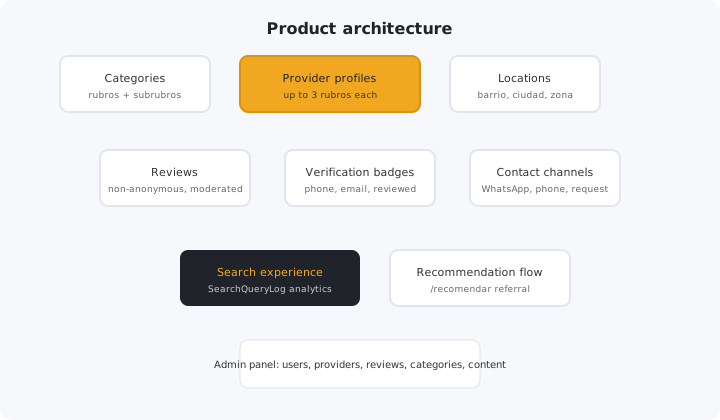
Siblings Software delivered the full product stack: consumer and provider journeys, authentication, review workflows, contact instrumentation, and an admin back office. Scope stayed focused on behaviors that prove the model, while the monorepo architecture left room for later modules such as subscriptions or native mobile clients.
- Home search with rubro, subrubro, zone, and keyword discovery
- Public provider profiles with configurable contact options
- WhatsApp handoff without exposing numbers before intent is shown
- Phone verification through Twilio Verify before enabling call or WhatsApp paths
- Double-review flow with moderation and quick reputation tags
- Admin modules for users, providers, categories, content, and banners
Technical Stack
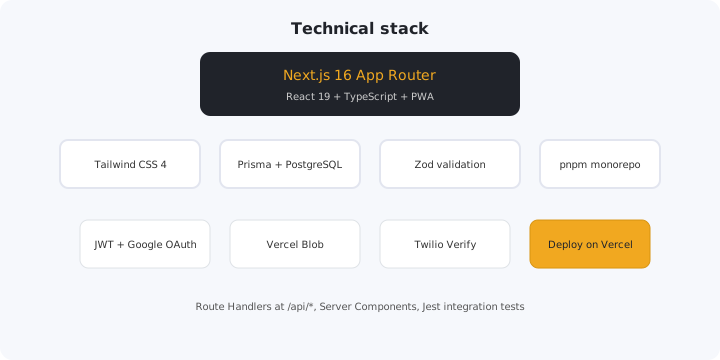
The repository is organized as a pnpm workspace with Turborepo pipelines across apps/web and shared packages for database access, UI primitives, and domain types. The web app runs on Next.js 16 with React 19 and TypeScript, styled with Tailwind CSS 4, and packaged as an installable PWA. Prisma maps a PostgreSQL schema that connects users, provider profiles, categories, reviews, contact events, saved providers, and admin-managed content.
Authentication combines email and password with bcryptjs hashing, Google OAuth for faster signup, and JWT sessions handled through jose. Input boundaries use Zod so server actions and API handlers share predictable validation rules. Media uploads route to Vercel Blob, while deployment follows patterns documented on nextjs.org and vercel.com/docs. The production preview runs at bocaenboca.vercel.app.
Key User Flows
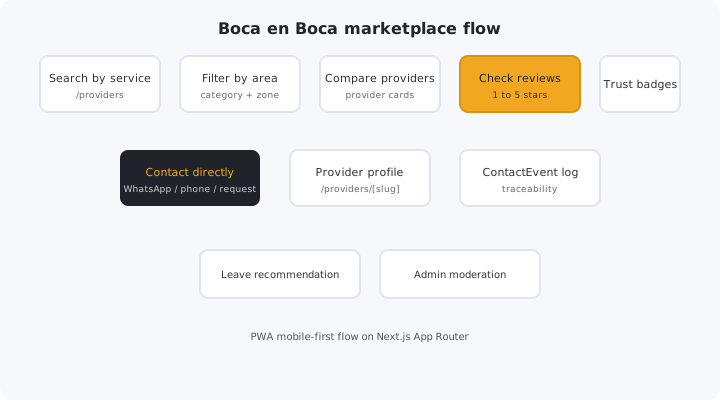
Consumer flows start with search, continue through profile evaluation, and end in a logged contact action. Because WhatsApp is the default coordination channel in Argentina, the product treats it as infrastructure rather than a footer link. Providers can expose WhatsApp, optional phone reveal, or a short contact-request message after phone verification.
Provider onboarding covers profile completion, rubro selection, and contact-mode configuration. Review flows require identifiable participation. Admin flows cover category trees, suggested rubro approvals, review moderation, and editable content blocks.
Trust Model and Local UX
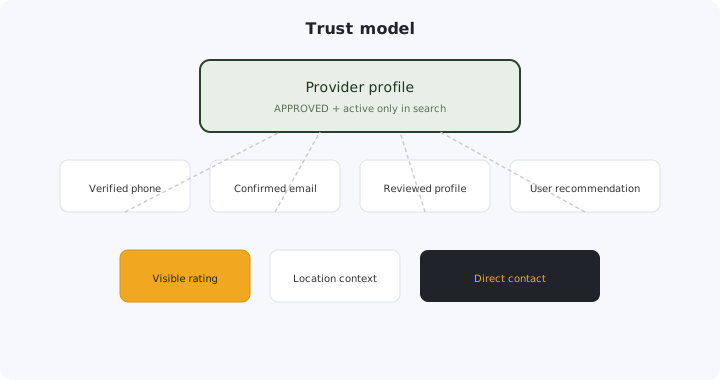
Marketplaces fail in Argentina when they feel imported. Boca en Boca uses Argentine Spanish, rubro-first taxonomy, and reputation tags that mirror spoken recommendations. Reviews stay attached to named users, and moderation tools let operators intervene without losing community credibility.
The PWA layer matters because discovery and follow-up happen on a phone between errands. Install prompts and responsive layouts keep the product usable on mid-range devices across Cordoba and Greater Buenos Aires.
Challenges and Tradeoffs
Internal chat, payments, and advanced ranking were deferred so the team could prove search, contact, and review behavior first. Phone privacy was another tradeoff: the staged WhatsApp and phone-reveal model balances intent with spam protection. Building from Argentina reduced product risk because engineers shared context about how neighbors actually hire and follow up on service leads.
Why This Matters for Argentina Delivery
International buyers often ask whether a LatAm team can own product thinking, not only implementation tickets. Boca en Boca answers that question with a typed monorepo, live deployment, moderation tooling, and contact flows tuned to WhatsApp-first behavior. It shows how Argentina-based delivery keeps product decisions grounded in the market the app serves.
What Could Come Next
Future phases can add subscriptions, richer ranking, push notifications, or native mobile clients. Because packages are separated in the monorepo and the schema tracks contact events and service records, new modules can attach to existing identity data. Phase one focused on market proof: searchable supply, credible reviews, and phone-native contact behavior.
Frequently Asked Questions
Six practical questions teams ask when they evaluate this marketplace build and Argentina delivery setup.
Boca en Boca is a PWA marketplace for finding trusted service providers through recommendations, reviews, and direct contact. The name reflects how people in Argentina often hire plumbers, electricians, tutors, and other professionals: they ask someone they trust, get a name de boca en boca, and follow up on WhatsApp before committing.
The product logic is rooted in local behavior: neighborhood search, rubro-based discovery, phone verification, and WhatsApp as the default follow-up channel. Building from Argentina let the team encode those patterns directly into UX, data models, and admin workflows instead of adapting a generic international template after launch.
The codebase is a pnpm and Turborepo monorepo with Next.js 16, React 19, TypeScript, and Tailwind CSS 4 on the frontend. Prisma and PostgreSQL handle persistence, Zod validates inputs, JWT sessions use jose, passwords use bcryptjs, Google OAuth handles social login, Twilio Verify supports phone verification, Vercel Blob stores media, and the app ships as a PWA on Vercel.
Reviews are non-anonymous and tied to identifiable users. Consumers can leave star ratings, quick reputation tags such as punctual or responsive, and moderated feedback. Provider profiles connect to contact events and service records so reputation builds inside a traceable community rather than anonymous star counts.
In Argentina, WhatsApp is where service conversations actually happen after a recommendation. The platform supports direct WhatsApp contact without exposing the provider number upfront, optional phone reveal, and short contact-request messages. Phone verification gates those channels so contact options stay credible.
Evaluate whether the partner understands local product behavior, can ship a typed monorepo MVP with admin tooling, and can align marketplace flows with real contact habits. This case shows project-based delivery from Argentina with a live product at bocaenboca.vercel.app rather than slide-deck claims.
CTA: Discuss Your Marketplace MVP
If you are planning a local services platform, community marketplace, or trust-heavy recommendation product, we can help you define MVP boundaries, contact flows, and admin scope with the same practical approach used in Boca en Boca. The objective is to launch with behavior that fits your market, not a template that fights it.
Siblings Software delivers from Argentina for founders and product teams that need engineering depth plus local product judgment. Review our web development and project-based outsourcing services, then contact us to map a first phase.
For the US domain version, visit siblingssoftware.com/en/case-studies/boca-en-boca/.
CONTACT US
Last updated: July 2026